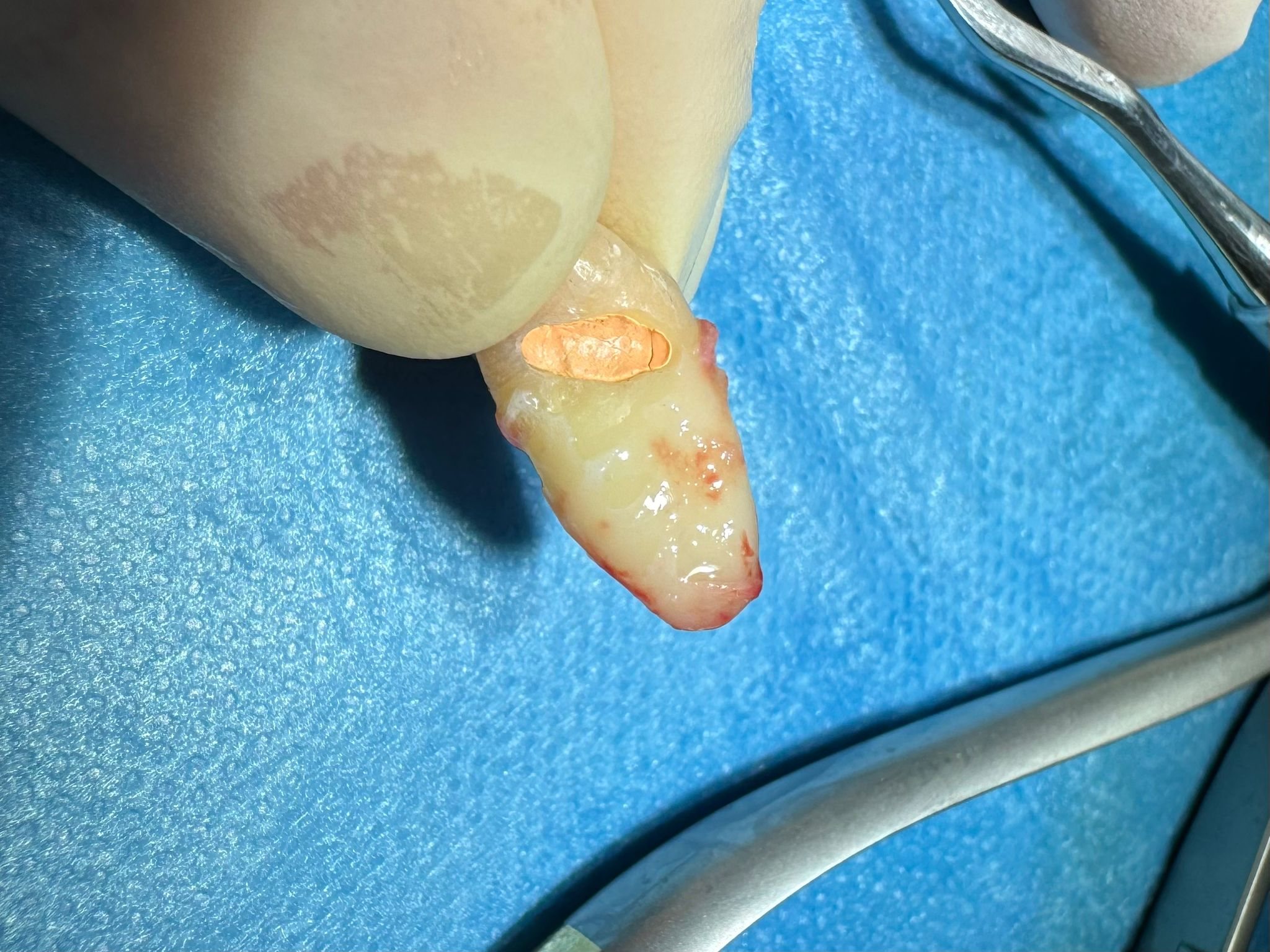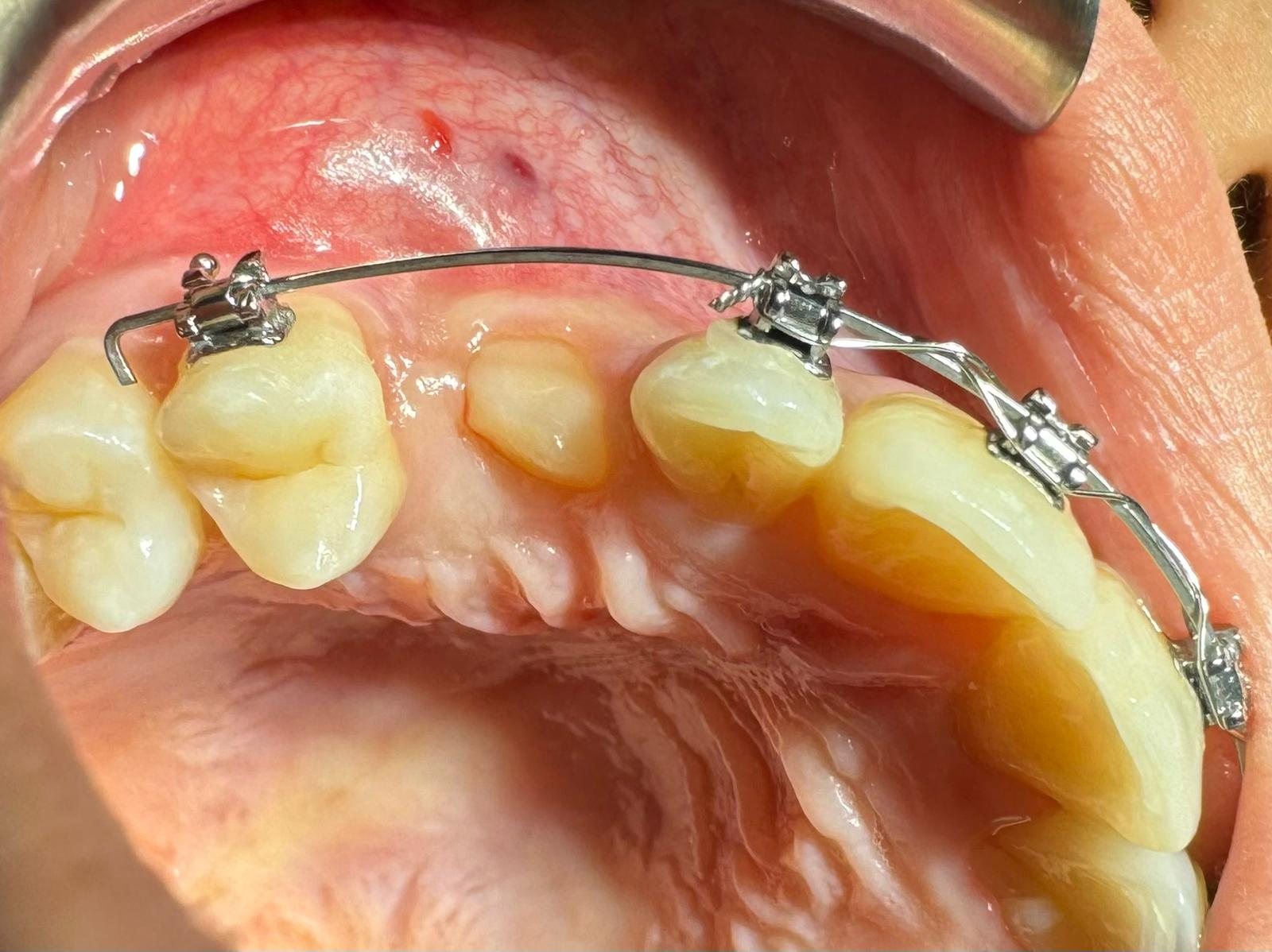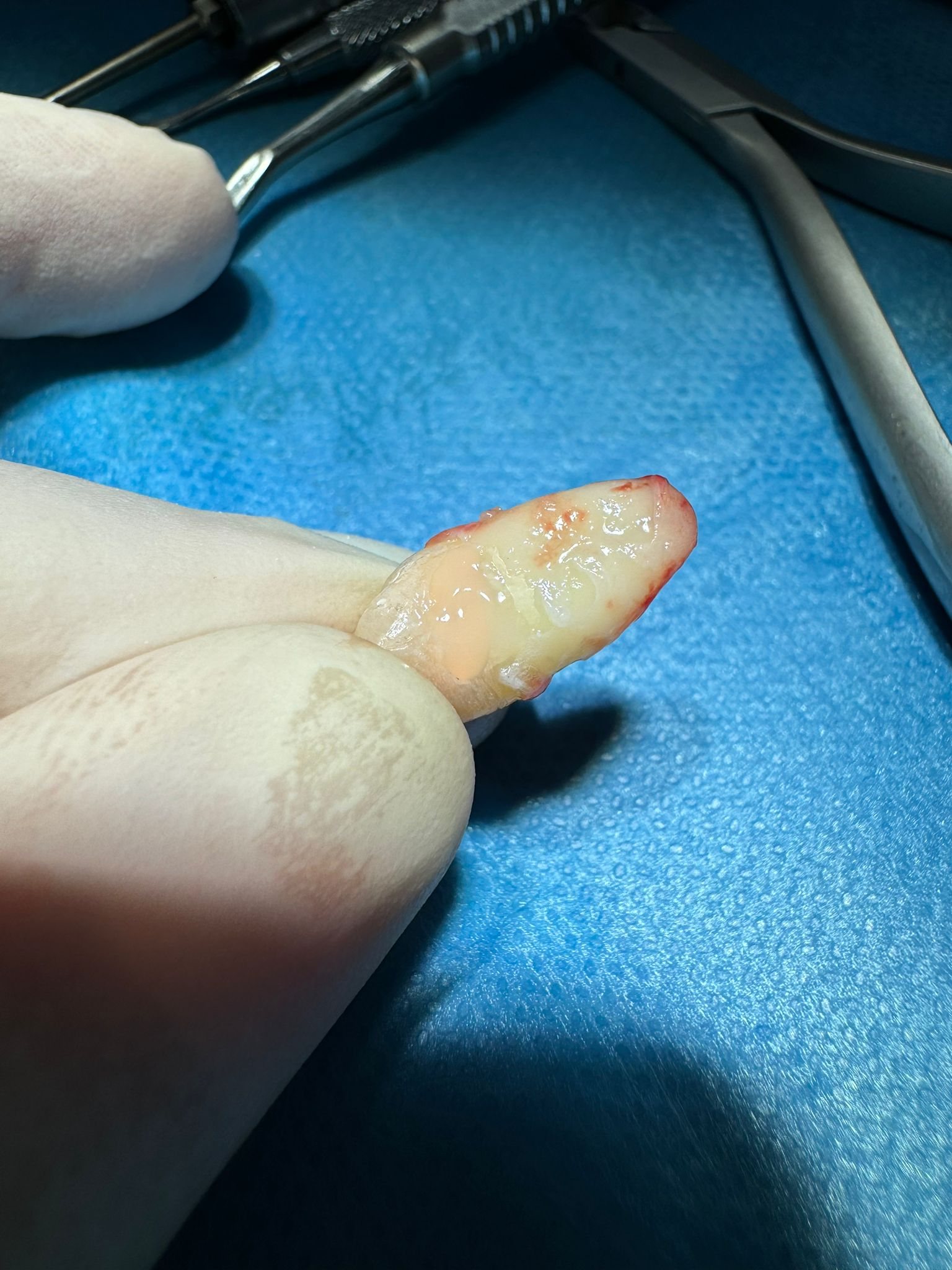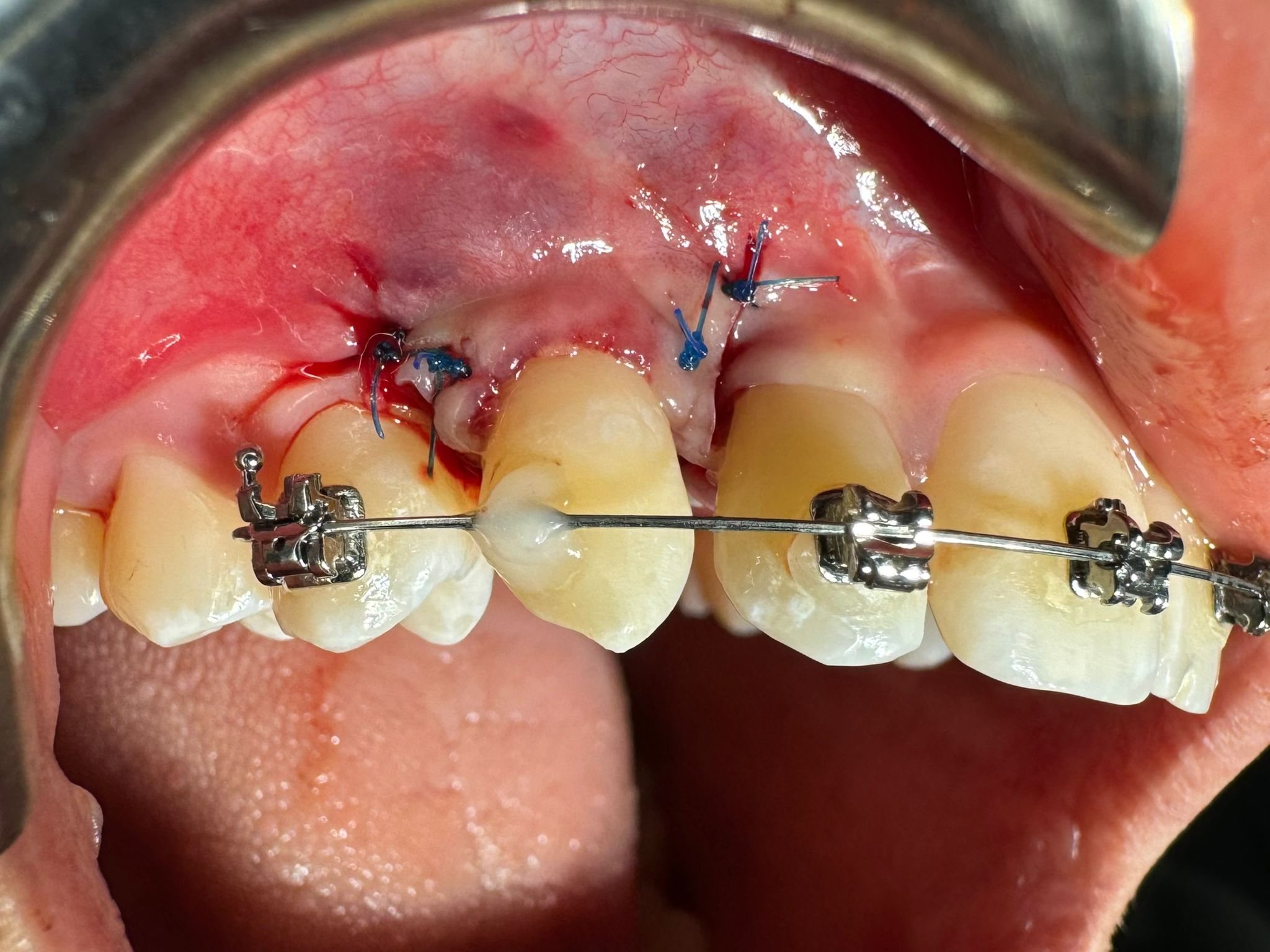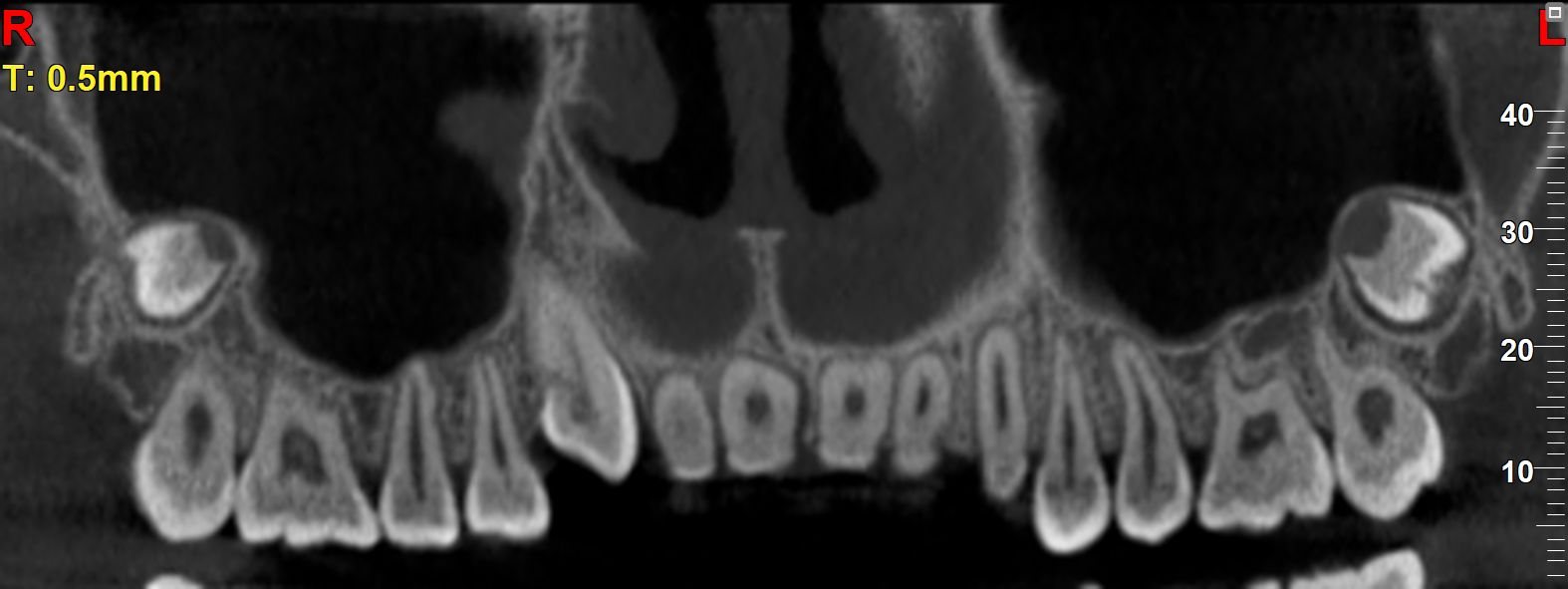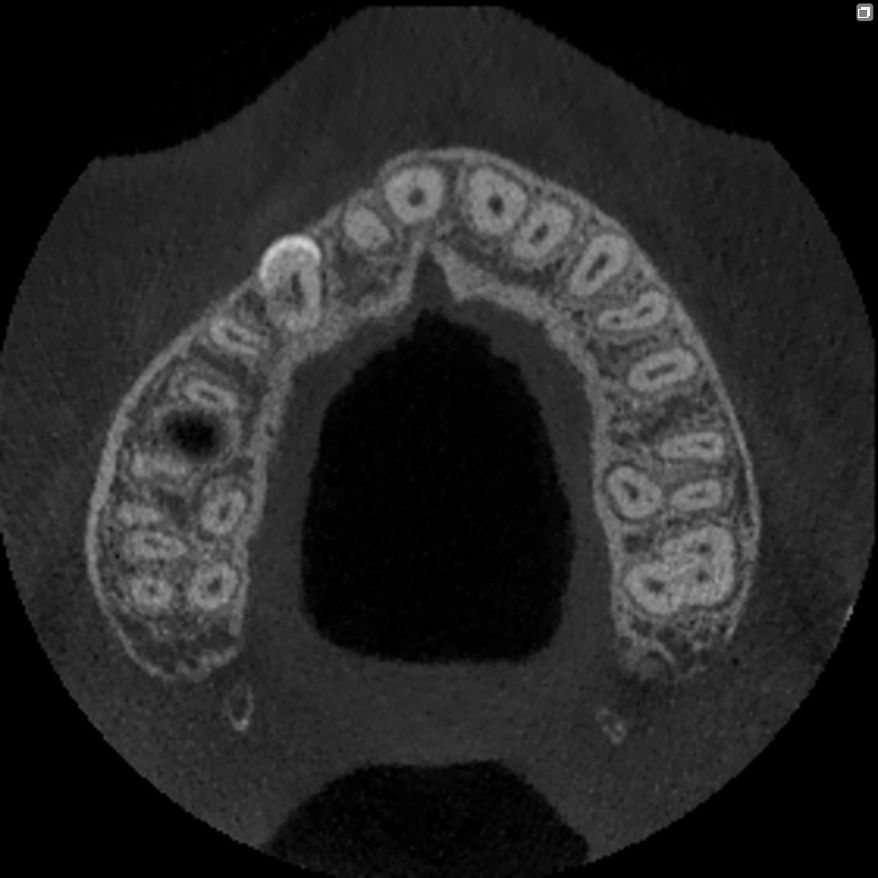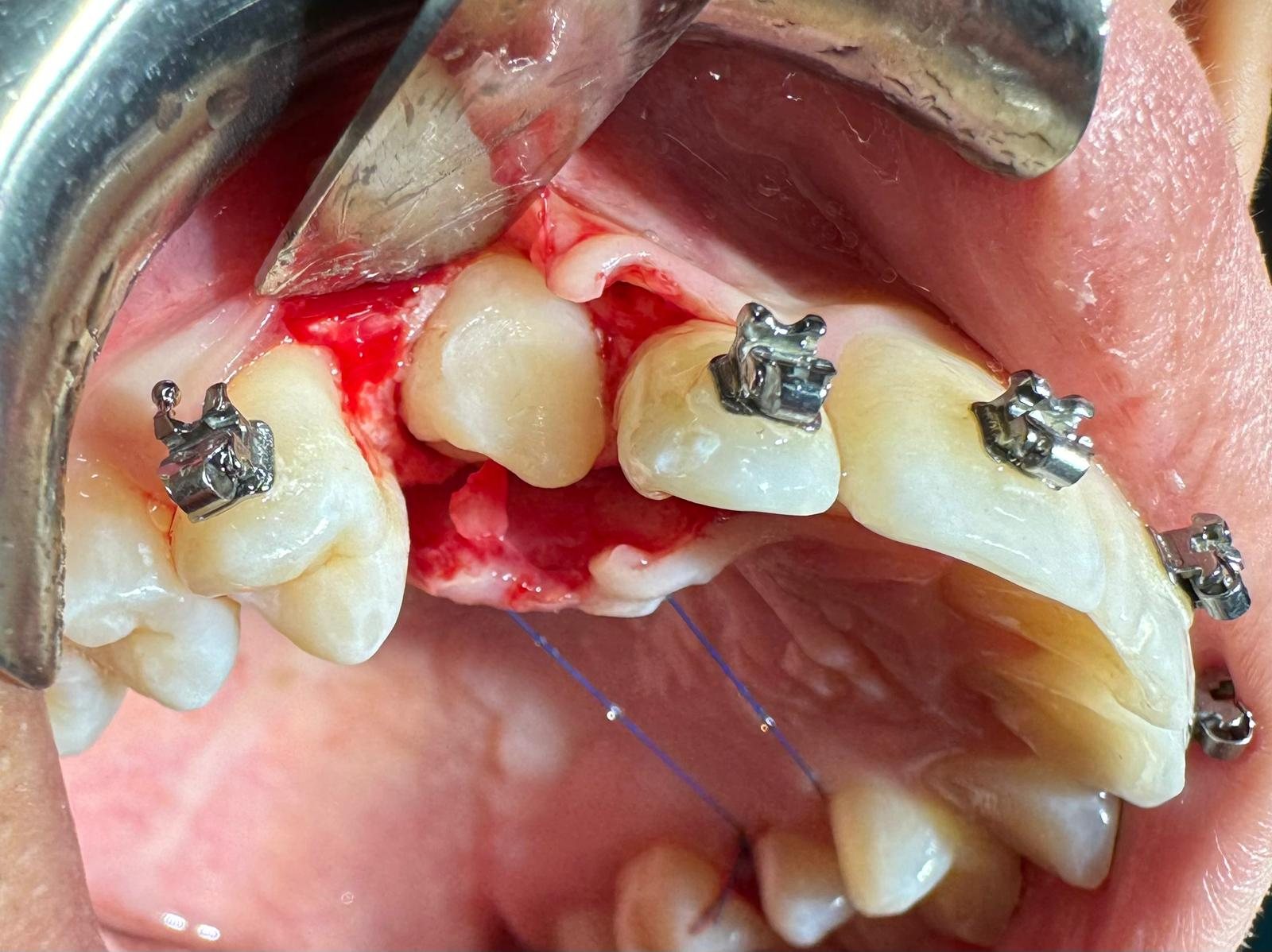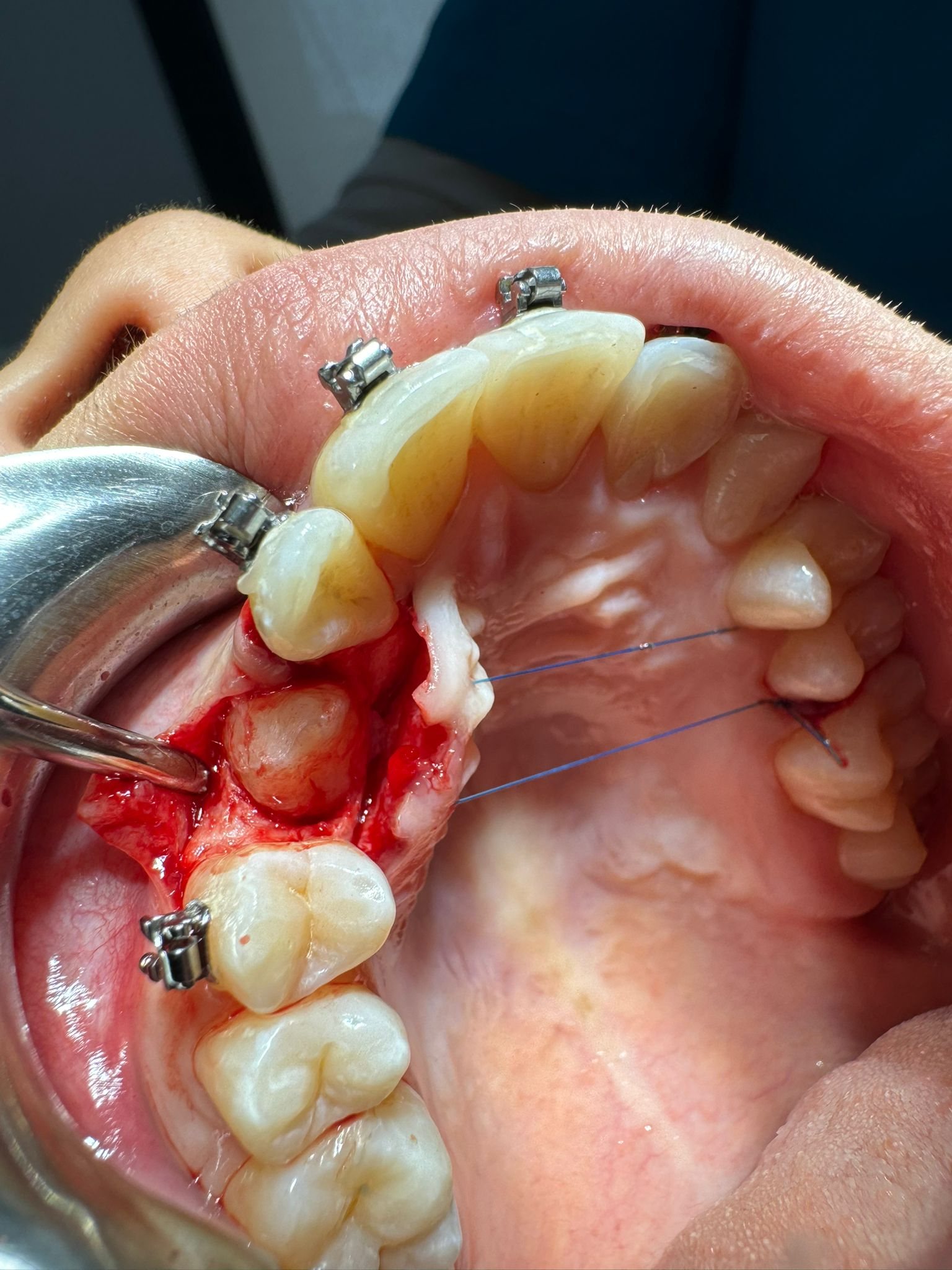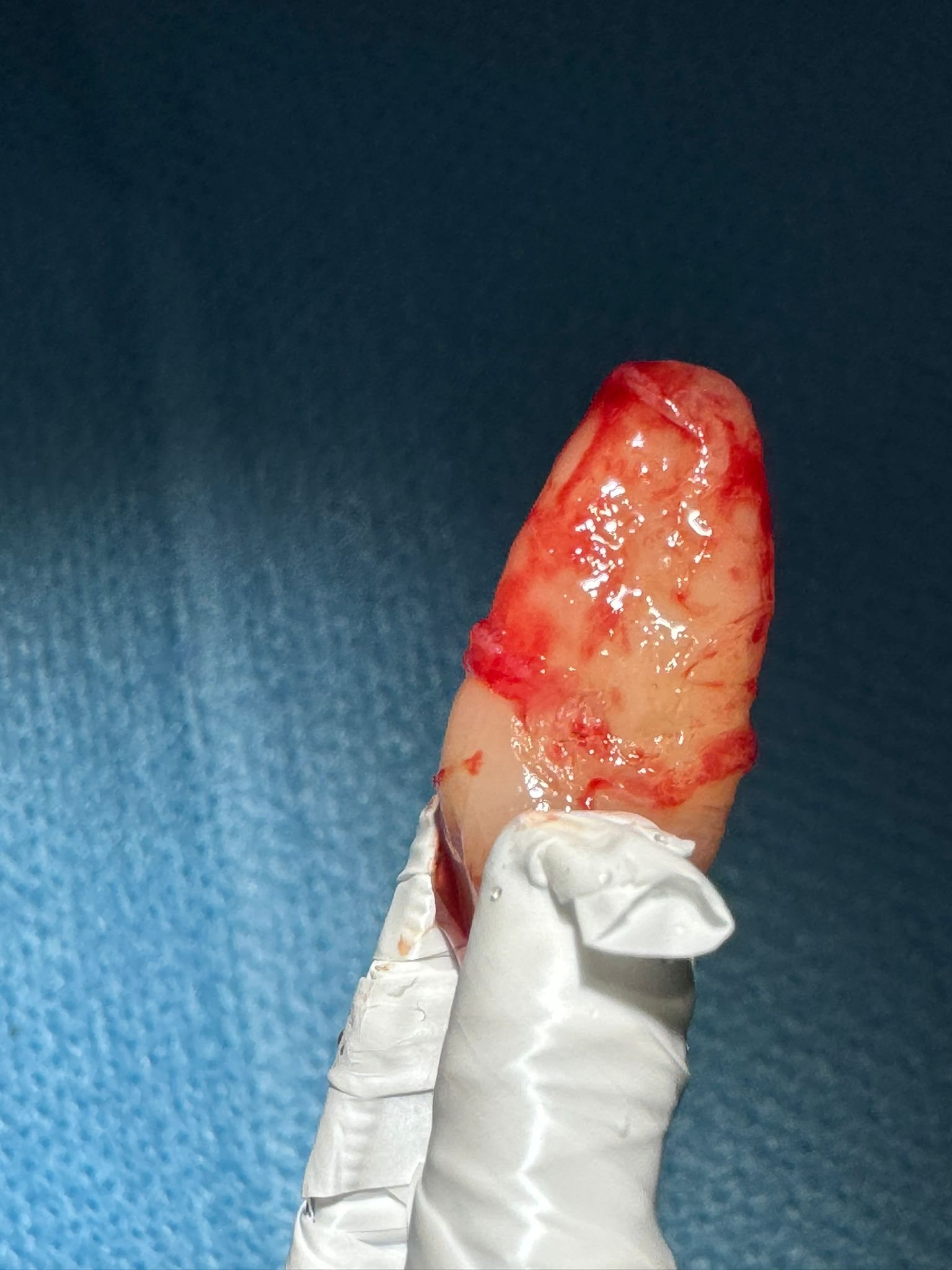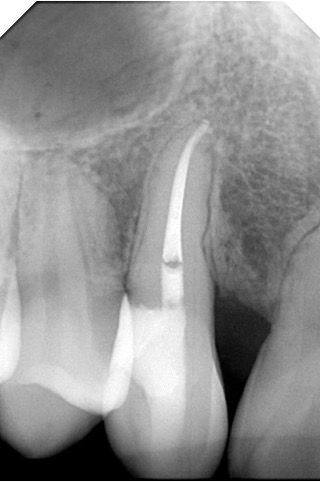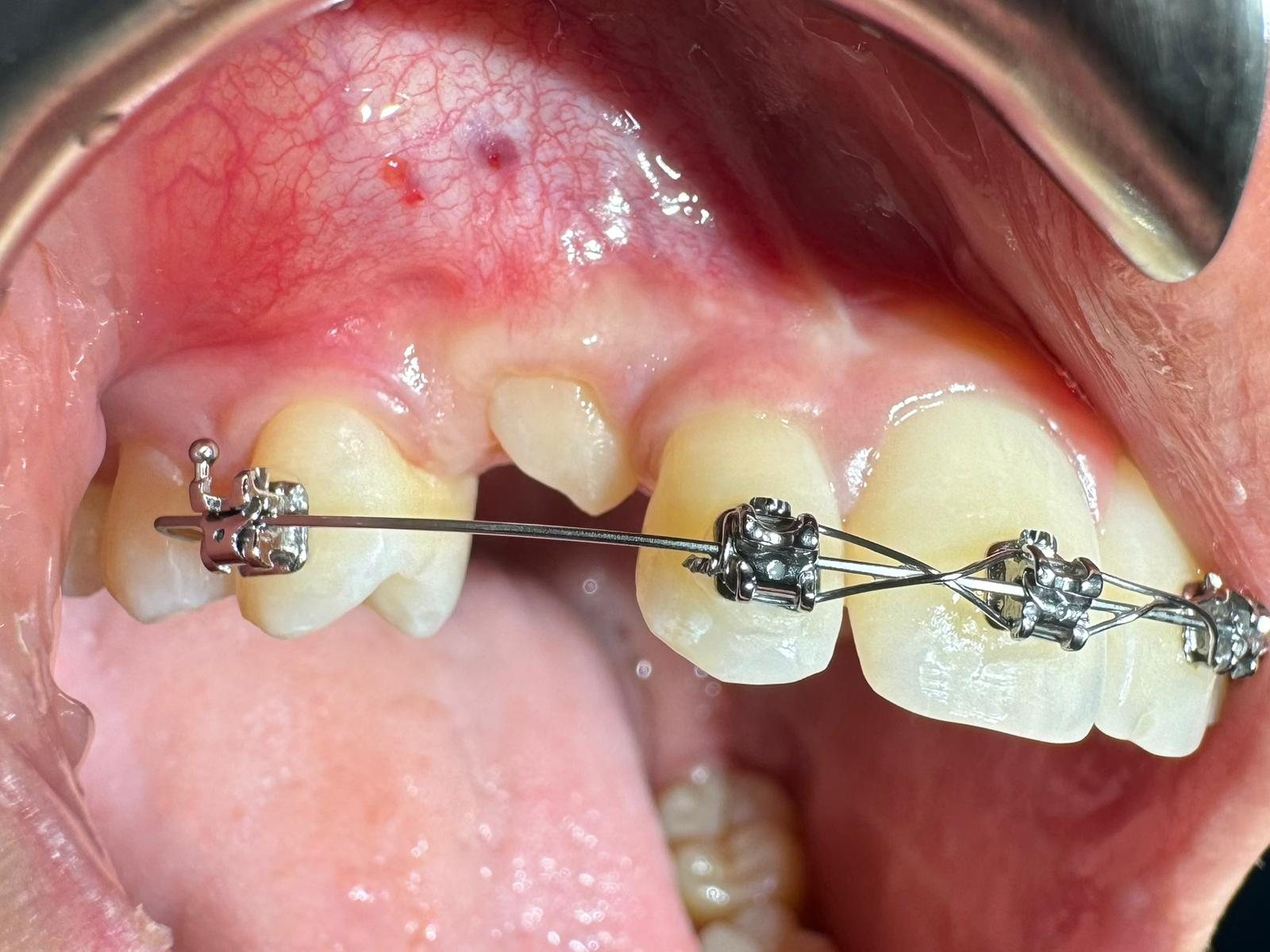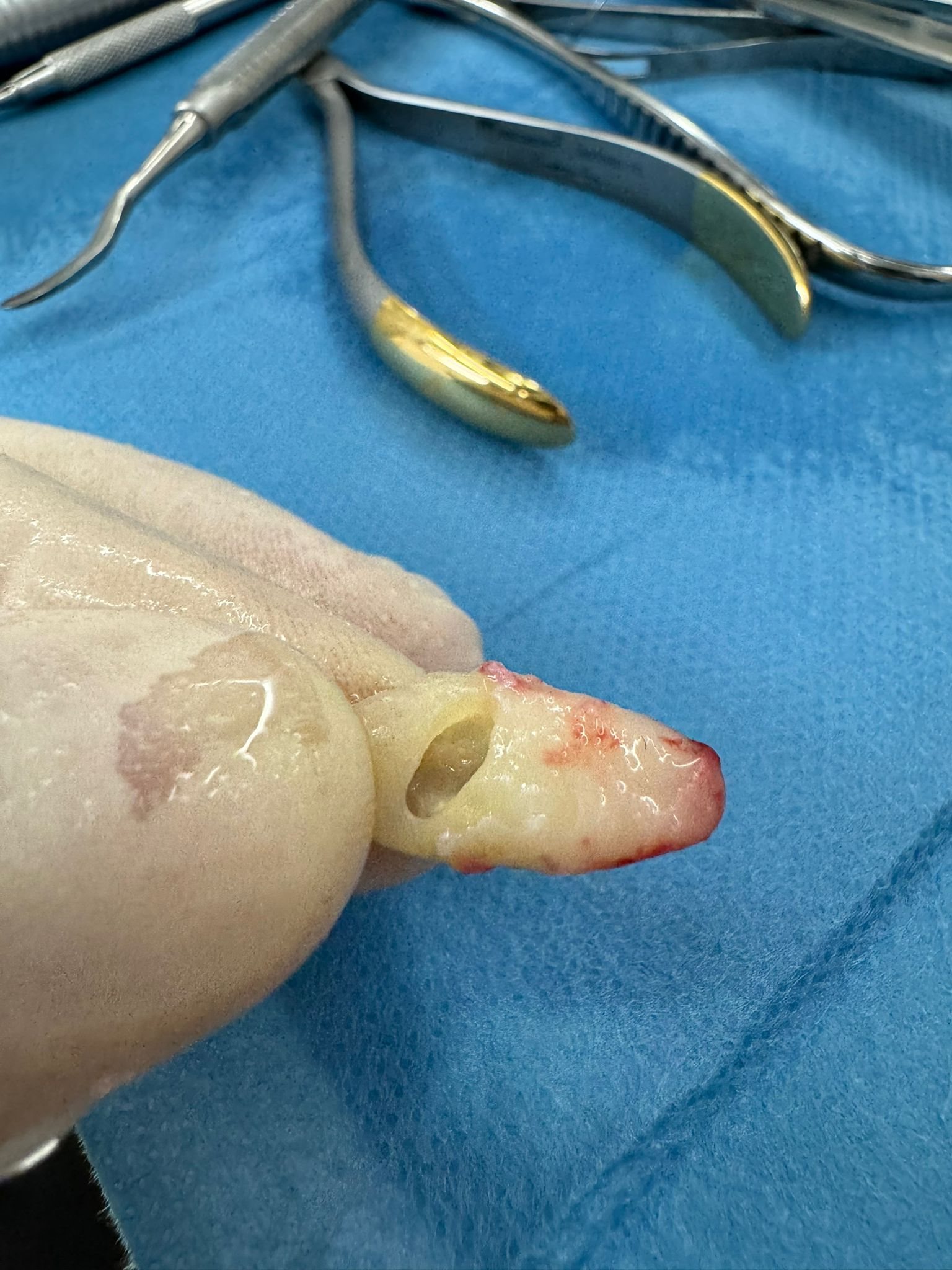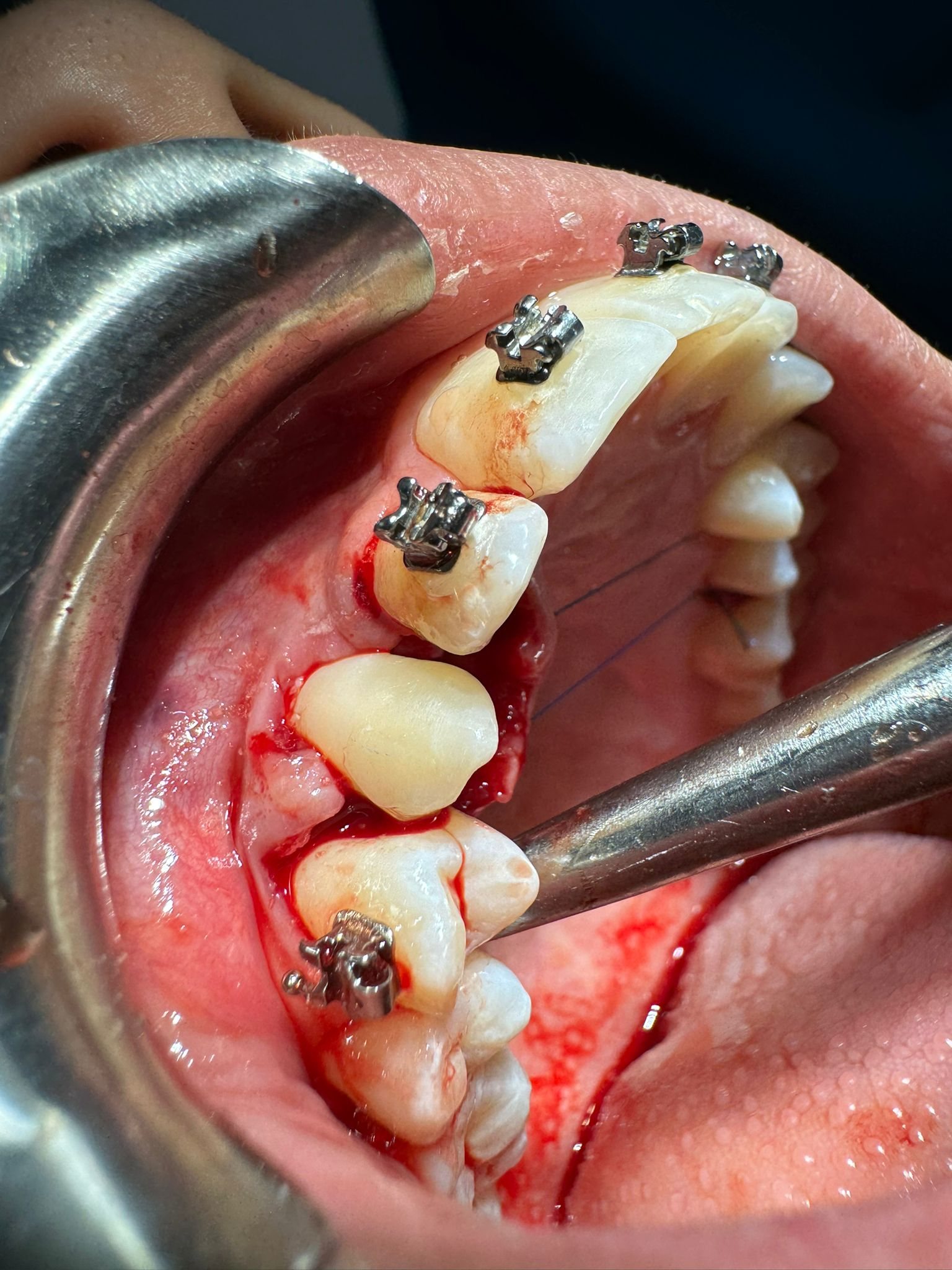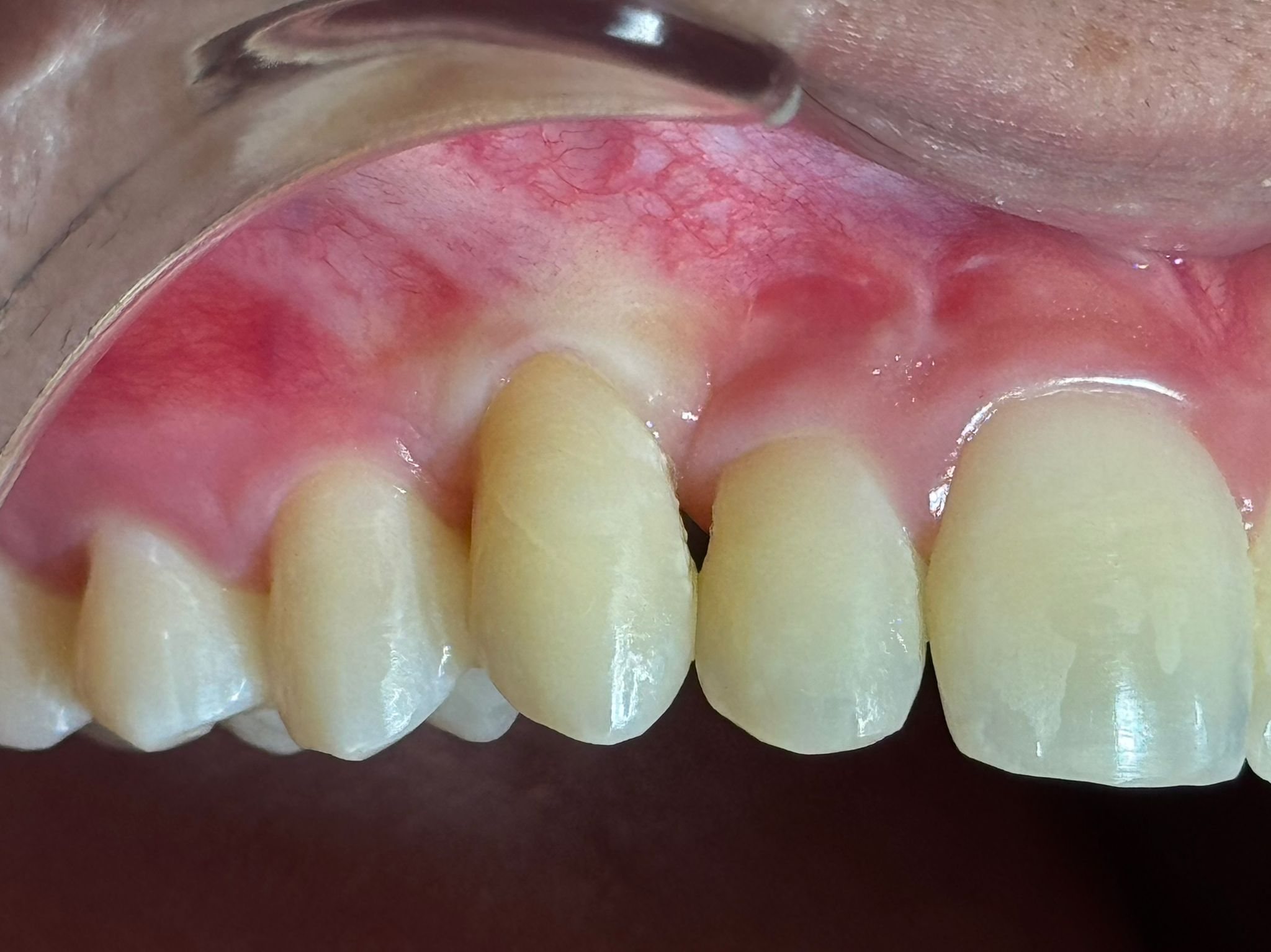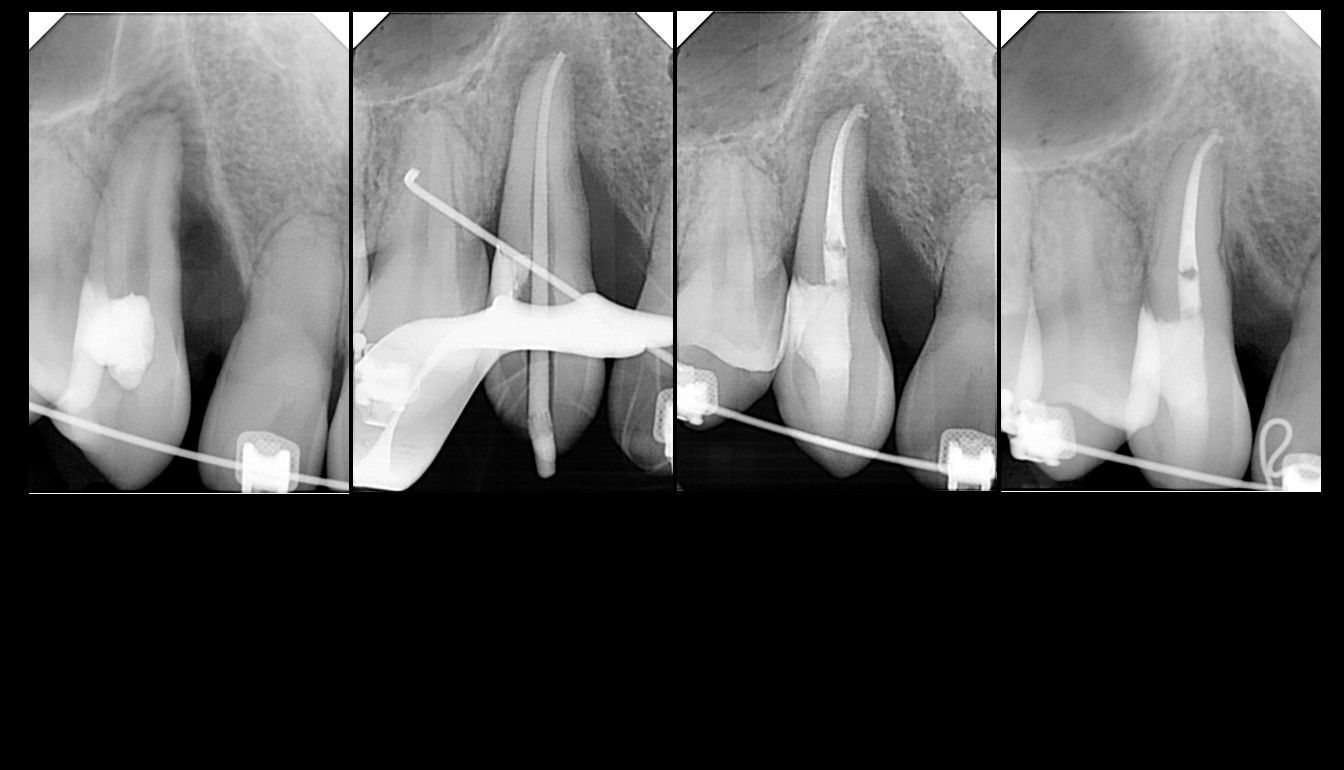
I would like to share a case whose outcome exceeded my initial expectations. The canine was ankylosed to the bone over a small area distal to and just below the cemento-enamel junction. Orthodontists often refer ankylosed canines to me for transplantation. However, a truly ankylosed tooth is not normally indicated for transplantation because an intact periodontal ligament is the key factor for success, and ankylosed teeth lack a functional ligament. When I agree to treat these patients, it is with the clear expectation of providing an interim solution, as the canine will eventually be lost. Because these patients are young, however, transplantation can provide an effective temporary solution until they are old enough for implant treatment. This particular tooth had only a small area of ankylosis. I used the Mallet and several instruments from the Blexo range to section the bone bridge. Do not use Blexo instruments on bone as I did unless you are prepared to sacrifice an instrument for a greater cause. I did not, of course, use the Mallet tips on the healthy portion of the root, to avoid damaging the periodontal ligament. Once the bone bridge had been sectioned, the tooth was easy to remove and the resorptive area could be managed extraorally. The tooth was then transplanted and the orthodontic treatment completed. What pleased me most was that we had managed the case expecting the tooth to become ankylosed again in its new position. Instead, it healed perfectly, with only minimal and clinically insignificant surface resorption, and the patient will be able to benefit from it indefinitely. I had forgotten about this case, but rediscovered it while preparing the presentation for a dental-autotransplantation course held last weekend. I wanted to share it to demonstrate the precision of the Blexo tips. I will be happy to answer any questions.
Original text · Italian
Voglio condividere con voi un caso che mi ha dato più soddisfazione rispetto all’aspettativa iniziale. Si tratta di un canino che si era anchilosato all’osso in una piccola area al di sotto della linea smalto-cemento distalmente. Spesso i colleghi ortodontisti mi inviano canini anchilosati da trapiantare, ma se il dente è realmente anchilosato non c’è indicazione al trapianto perché il Key factor del successo è il legamento parodontale e i denti anchilosati non ne hanno. Quando accetto di operare questi pazienti è con la chiara aspettativa di una soluzione ad interim, perché poi il canino sarà perso, ma trattandosi di pazienti giovani questa del trapianto può essere una soluzione temporanea efficace per attendere un’età nella quale sia possibile fare impianti. Questo caso specifico aveva un’area piccola di anchilosi e per tagliare il ponte osseo ho utilizzato il mallet e alcuni strumenti della linea Blexo (non fate mai lavorare i Blexo sull’osso come ho fatto io a meno che non siate pronti a sacrificare uno strumento per una causa maggiore). Ovviamente non ho utilizzato gli inserti del mallet nella porzione di radice sana per non danneggiare il legamento. Una volta tagliato il ponte osseo è stato facile rimuovere il dente e gestire la zona di riassorbimento extraoralmente. Poi il dente è stato trapiantato e il caso concluso dal punto di vista ortodontico. La cosa che mi ha dato soddisfazione è che questo caso è stato gestito con l’ipotesi che il dente si rianchilosasse nella nuova posizione, ma invece è guarito perfettamente (con un minimo e insignificante riassorbimento di superficie) e la paziente potrà beneficarne a tempo indeterminato. Mi ero dimenticato di questo caso, ma mi è saltato fuori sistemando la presentazione per un corso di Autrapianto Dentale fatto il weekend scorso. Ho voluto condividerlo con voi per apprezzare la precisione delle punte della linea Blexo. Se avete domande sono a disposizione.